An africanews report on bug-based compost in Kenya describes one processor turning about 40 tonnes of food waste a month into compost sold to farmers across the country, with demand outstripping supply. That is a supply story about waste management, not a soil chemistry result. Nobody has run a multi-year trial comparing that compost against manure or mineral fertiliser on Kenyan soil, so any fertiliser Kenya decision built on that headline is built on nothing measurable. What has been measured, for thirteen years, on a phosphorus-poor soil in semi-arid Eastern Kenya, is manure against mineral fertiliser, and it answers a question every grower actually faces: apply every season, or bank on what the soil is already holding.
The advice everyone follows without checking it
Most extension guidance, and most agrovet counter advice, treats manure and fertiliser as things you top up every planting. That habit comes from a reasonable place: nutrients get taken up, some leach, some volatilise, so the working assumption is that last season's application is spent by the time you plant again. On a well-drained, high-turnover soil that assumption holds reasonably well. It does not hold on every Kenyan soil, and the Effects of manure application on crop yield and soil chemical properties trial run by the Embu Regional Research Centre is the clearest demonstration on Kenyan ground that it does not.
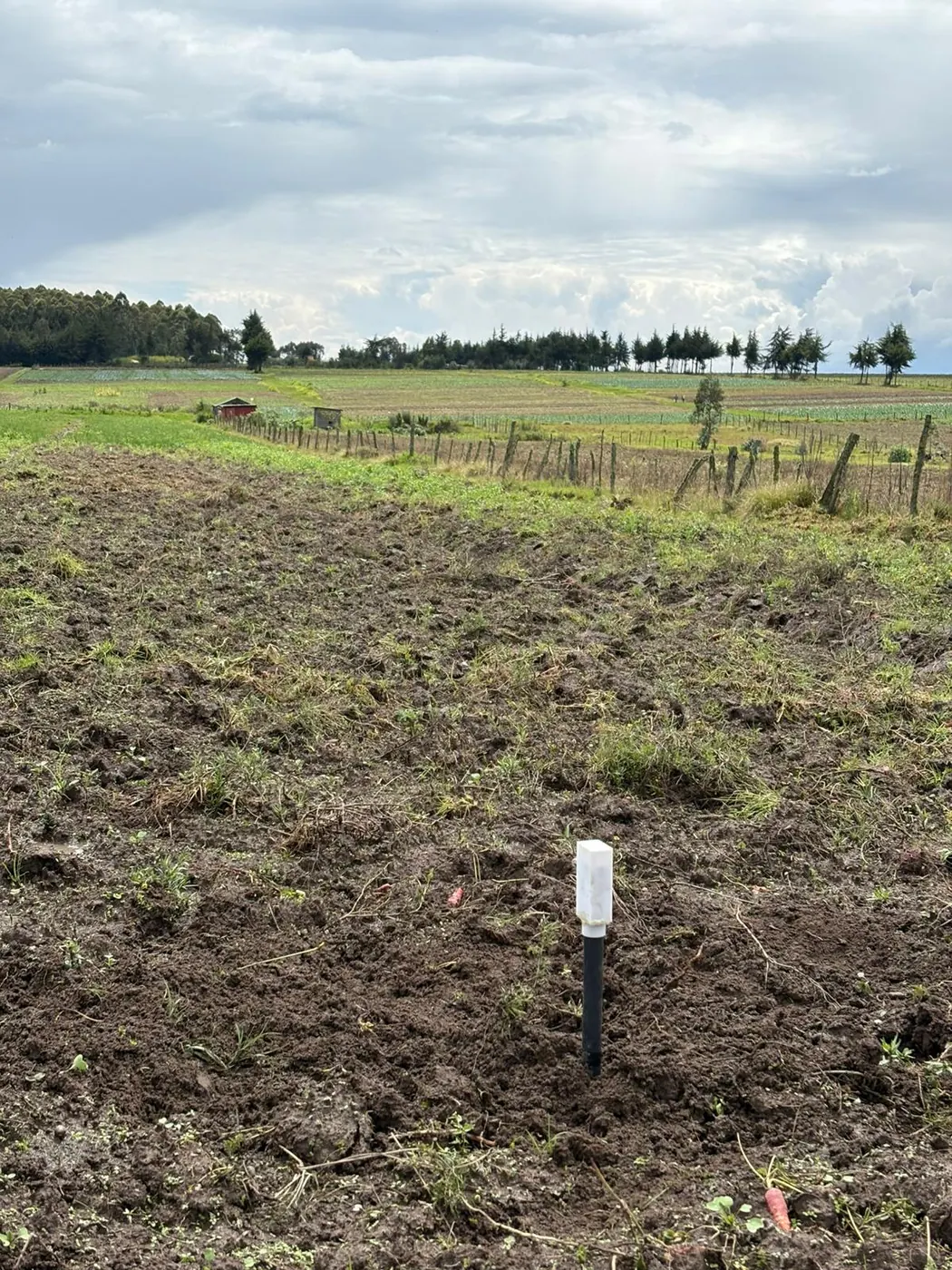
Goat manure went on at 0, 5 and 10 tonnes per hectare annually for thirteen years. That is not a short demonstration plot designed to produce a tidy result in three seasons. It runs long enough to see what happens well past the point where early build-up would normally be assumed spent, which is exactly where the annual top-up habit starts to wobble.
Soil carbon and phosphorus stopped climbing at year seven
Two measured outcomes, soil organic carbon and Olsen phosphorus, rose through the early years of manure application and then flattened. Both increased for the first seven years and then held roughly constant, according to the trial record. A soil behaving that way is approaching a new equilibrium, not banking nutrients indefinitely the longer manure keeps going on.
This matters for a decision most guidance skips entirely. If a block has carried several years of manure history, and it sits somewhere in that seven-year climb or past it, another season's application is not buying what it bought in year one. Soils differ enough that nobody can tell you your own block's exact position on that curve without checking it, but the shape itself is worth knowing before spending on manure at a flat rate regardless of history. A farm that has applied manure for nine straight years and keeps applying it at the same rate every season is likely paying for carbon and phosphorus gains that plateaued two years earlier.
Grain yield would not settle into a clean trend
Here is the part the equilibrium result does not prepare you for: yield itself did not follow soil carbon and phosphorus into a tidy pattern. Trends in grain yield were not identifiable because season-to-season variation swamped the manure signal in any given year. Sorghum yield under continuous manure could be described reasonably well by rainfall and manure input together, but only once seasons above 500 mm of rainfall were excluded from that fit.
That exclusion deserves more weight than a footnote gets it. It means the manure-yield relationship found in this trial holds in ordinary and dry seasons, and breaks down in wet ones, presumably because excess water changes how nutrients move through the profile or how the crop takes them up. A grower reading this trial for a rule to apply at home should take the caveat as seriously as the headline number. Whatever yield response you expect from manure, expect it to vanish in an unusually wet season, and resist the instinct to blame the manure regime for a bad year that rainfall, not fertility, actually caused.
Mineral fertiliser matched manure, then lost ground
When mineral fertiliser supplied the same nitrogen and phosphorus as the 5 tonne per hectare manure rate, it produced the same yield initially. Fast, predictable, no waiting on a build-up curve. But nine years in, mineral fertiliser yields had declined to about 80 percent of their earlier level. No baseline percentage is given against manure specifically, so that figure should not be read as a head-to-head loss margin, only as a decline against the mineral plot's own earlier performance.
Nine years of straight mineral input, without organic matter behind it, appears to erode something the manure plots were meanwhile building. That is the actual argument for using manure on a degrading soil at all: not that it beats fertiliser this season, but that fertiliser alone carries a shelf life the trial can put a rough number on, while manure keeps adding to carbon and phosphorus for its first seven years and then holds steady rather than falling away.
The residual window is four years in, seven or eight years out
The most useful single figure in the whole trial, for anyone planning cost rather than chasing theory, is this: manure applied for four years left a residual effect, measured by yield, soil organic carbon and Olsen phosphorus, that lasted another seven to eight years after application stopped. Roughly double the payback period for a quarter of the years of labour and material spent building it.
The trial's own recommendation follows directly from that number: manure can go on intermittently, with nutrient needs topped up by mineral fertiliser in the gap years, instead of paying for a full manure dose every single season. This gives a specific, checkable shape to a general instinct many Kenyan farmers already hold, that manure lasts. Roughly seven to eight years of carryover after four years of build-up is a ratio a farm manager can actually use to decide when the next manure application is due, rather than guessing by soil colour or a single bad harvest. See also this site's piece on fertiliser for the wider background.
Why this decision matters more when 86 percent of your fertiliser is imported
Kenya's mineral fertiliser supply is overwhelmingly bought in. Imports account for 86 percent of national fertilizer supply, according to the CGIAR overview of the fertilizer supply chain in Kenya, with domestic manufacturing capacity remaining very limited. That figure changes what a manure-versus-fertiliser choice actually is on a Kenyan farm. It is not simply an agronomic pick between two nutrient sources of similar reliability. It is a choice between a locally sourced input with a known but slow build-up curve, and an input tied to shipping schedules, currency movements and global fertiliser prices.
That exposure has already been covered in detail in the piece on why the fertiliser price gap between Kenya counties is bigger than it looks, which traces how subsidy coverage and county-level averages hide very different costs for farms that look similar on paper. World Bank analysis of fertiliser policy reform effectiveness in Kenya goes further, arguing that new domestic fertiliser plants alone will not fix food security without further policy reform alongside them. Read together, both sources point the same direction: the supply side of mineral fertiliser sits outside a farm manager's control, while the manure residual effect is a decision that manager can actually make.

The equipment gap nobody prices into the manure decision
Manure is heavier and bulkier per unit of nutrient than a bag of mineral fertiliser, and spreading it evenly across a block at 5 or 10 tonnes per hectare is a labour and equipment problem most advice glosses over. Kenya's own trade figures for manure spreaders and fertiliser distributors, tracked under HS code 843240 in World Bank trade data on exports of that equipment to Kenya, show how thin this market really is. India, the largest single exporter in 2021, sold just $11.58 thousand worth across 13 items. The next five countries on that list, the United Kingdom, Brazil, China, Turkey and South Africa, each sold less again, several of them only a handful of units.
Those totals describe a national fleet of mechanised manure-spreading equipment close to nonexistent. Most manure in Kenya goes on by hand, and that changes the practical cost of the four-year build-up strategy the Embu trial points toward. Nutrient economics favour manure over a long horizon, but getting 10 tonnes per hectare spread evenly across a block, year after year for four years, is not something a mineral fertiliser bag asks of a farm's labour. Weigh that cost honestly against the residual-effect saving before committing a block to a manure schedule, rather than treating the seven-to-eight-year payback as free money.
What generic fertiliser guides cannot tell you about your soil
Extension bulletins written elsewhere are built on the soils and rainfall where they were tested. University of Georgia guidelines for the Four Rs of fertilizer management in horticultural crops and the SDSU Extension fertilizer recommendation guide are both careful, well-tested documents, but SDSU says outright that its nitrogen, phosphorus and potassium equations come from field research in South Dakota and neighbouring states, built across soil test ranges from very low to very high specific to that region. Nothing in either document was measured on a semi-arid Kenyan soil, and neither claims to be.
That is the real gap a Kenyan grower works with: a strong, long-running local trial on manure and mineral fertiliser out of Embu, next to a set of well-resourced foreign guides on the mechanics of fertiliser rate-setting that were never calibrated against Kenyan soil or rainfall. Nobody has published a Kenyan version of the SDSU soil-test-to-rate table. Building your own equivalent means testing your own soil, tracking your own manure history against the seven-to-eight-year residual window, and treating the foreign guides as a way to think about the logic of rate-setting rather than a source of numbers to import wholesale onto a block they never touched.
Deciding what actually goes on your block this season
The decision the bug-compost headline never touches, and the Embu trial does, is timing rather than product. If a block has had four or more consecutive years of manure, it sits inside or approaching the seven-to-eight-year carryover window, and a full manure dose this season may spend money the soil does not need yet. Mineral fertiliser can top up specific nutrient gaps in that gap period at lower labour cost, accepting that nine years of mineral-only application shows a decline the trial measured but did not fully explain.
If a block has never had manure, or the carryover has clearly run out, judged by declining organic matter or falling yield against your own record, four years is roughly the build-up period during which soil carbon and phosphorus climb, even though any single season's yield may be too noisy from rainfall to read cleanly on its own. Tracking your own soil across that build-up, rather than relying on one season's yield figure, is close to what our piece on declining soil health in Kenya argues for: watching the trend, not the snapshot. None of this replaces measuring what your soil actually holds before committing four years of manure to a block. It only describes the shape of that commitment once you do.
Where the bug compost actually fits, if anywhere
The compost described in the africanews report has not been through anything like a thirteen-year trial against manure or mineral fertiliser on Kenyan soil. Demand for it is real and reported directly: the processor cannot keep up with orders. But demand outstripping supply says nothing about performance over years compared with the goat manure regime measured at Embu. Treating it as a proven substitute for either input, based on a supply story alone, would repeat exactly the kind of leap the trial's own caution about season-to-season noise should discourage a careful reader from making.
The honest position for a fertiliser Kenya grower right now is that this compost is an interesting new organic input with no published multi-year performance data against the two options that already have it. Until a comparable trial exists, the manure-versus-mineral decision, and its residual timing, remains the one built on evidence rather than a headline. Whether an emerging organic compost eventually earns a place in that rotation is a question for future trials, not this season's planning, and no amount of unmet demand reported today changes that fact.