Before a farmers cooperative in Kenya pays you once, it will ask you for money three times. On joining, it asks for share capital and a membership fee. Once you start selling through it, it deducts something from every delivery. These are three separate things. They are governed differently, and each comes back to you on its own terms, or not at all. Most growers roll all three into one joining cost and then judge the cooperative by the price it paid last season. That is backward. The price is the result. The causes are the capital structure, the governance record and the timing of payments. You can read all three before you hand over a shilling.
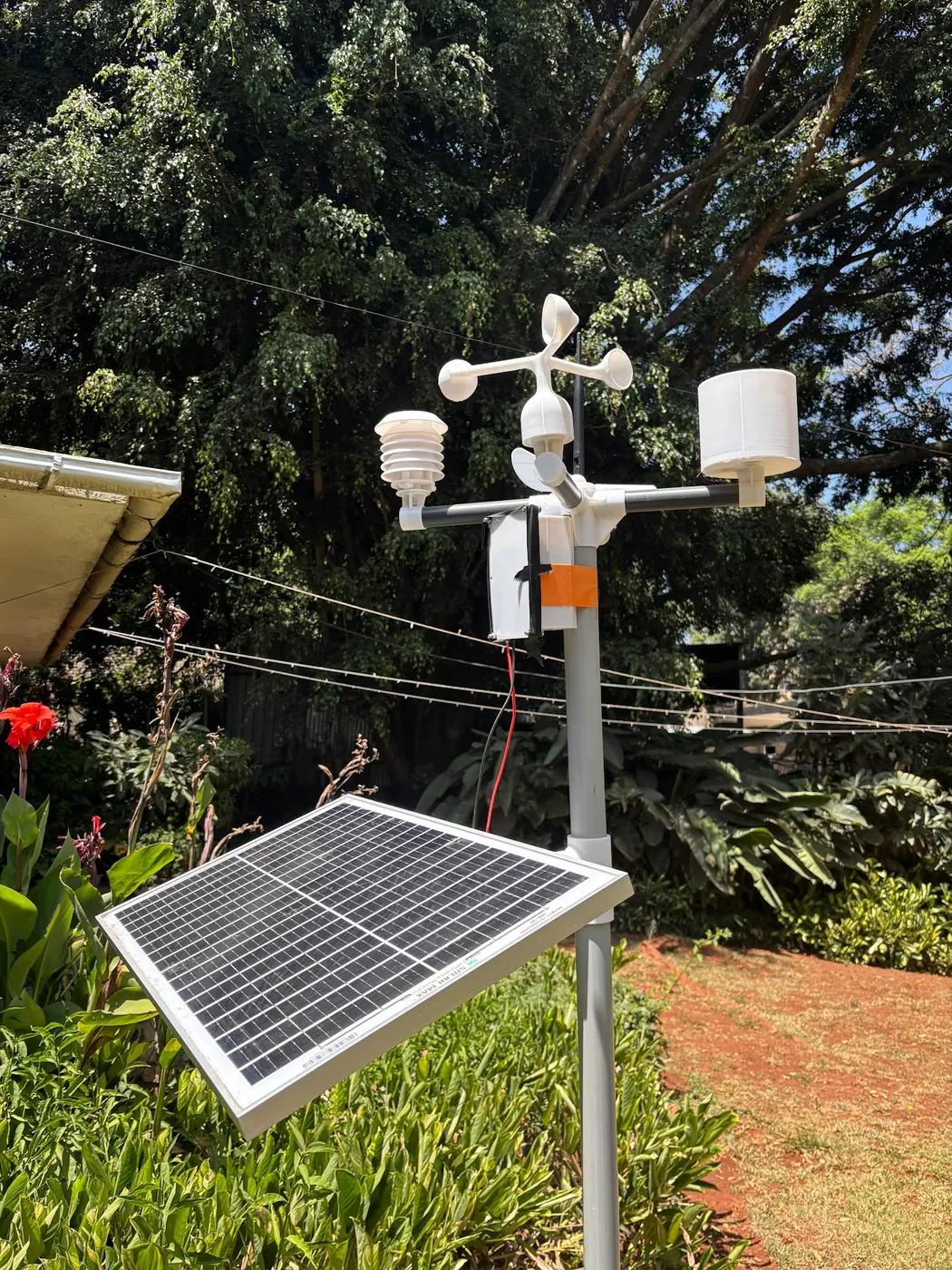
Measured by NuaSense weather stations and soil probes on Kenyan farms, over the period stated with each figure. Past readings, not a forecast.
Three lines on the joining form, and what each one buys
Share capital matters most, and it is the line people understand least. The FAO guide to internal financing of cooperatives spells out what it buys: the right to do business with the cooperative, use its services, attend and vote at the annual general meeting, and stand for office. It also marks your long-term financial stake. Put simply, shares are an investment in a business you part-own. The return on them depends on whether the business makes a surplus and decides to pay one out. Shares are not a deposit.
The membership fee works differently. FAO calls membership fees, and fees for miscellaneous transactions not treated as patronage, usually small. They pay for administration. Do not expect to get a membership fee back. If a cooperative charges a large one, it is doing something unusual, and you should ask about it at the counter.
The third line is the deduction on deliveries, and it runs as long as you are a member. It is taken per bag or per kilogram. The money funds the cooperative's marketing, transport and overheads. Whether that is reasonable depends entirely on what the cooperative does with the bulked crop. That is a later section.
No source gives you a Kenyan figure. FAO says the investment a member must make when joining, or later, is quite modest in many countries, and it gives no shilling amount for anywhere. No source in this article sets a Kenyan share value, fee or dividend, so this piece does not print one. You can ask for the bylaws, which set the minimum shareholding and the fee, and compare them with the last audited accounts. The ratio of your shares to the society's total member capital tells you how much of the business you would own and how many members it takes to fund it.
Where the money it promises you actually comes from
Every service a cooperative offers has to be paid for with money the cooperative has. That covers inputs on credit, an advance before harvest or a store to hold grain. FAO names three sources. They are members, as both users and investors; retained surpluses, especially unallocated institutional capital the society keeps rather than distributes; and external funding, which can be commercial credit, donor money or government support. Which of the three pays decides how safe the promise is.
Member capital belongs to the cooperative. FAO notes that commercial cooperatives have a motive to increase it because it is their lowest-cost, lowest-risk capital. As government and donor support declines, it becomes the best or only practical source. Retained surplus is also the cooperative's own money. It comes from past seasons when the cooperative earned more than it paid out. External credit is borrowed. Someone will want it back on a date that has nothing to do with your harvest.
The chairman says the society gives seed and fertiliser on credit. Ask which of the three pockets it comes from. If retained surplus pays, the cooperative has shown it can run at a profit, and it is lending you its own money. If member capital pays, your shares and everyone else's are funding it. The scheme is only as big as the membership is willing to invest. If a bank loan or a donor grant pays, the service will last exactly as long as that outside money lasts. The cost of the loan sits somewhere in the deduction you pay on deliveries. The balance sheet should list member share capital, reserves or accumulated surplus, and loans or grants as separate lines. If they are not separate, that itself tells you how the society is run.
Inputs on credit: the society's own money or borrowed on your behalf
Most growers join a cooperative for input supply. FAO puts it simply: input supply cooperatives may provide goods on credit, to be repaid after harvest. You can see why. The bag shows up at planting, and the money goes out at harvest, when you have it. But credit carries the same risk here as anywhere. FAO says it plainly: too much reliance on external credit to finance payments to members carries risk. Say a cooperative borrows from a bank to stock its store, lends that stock to members, and then has a bad season. It still owes the bank.
A cooperative account and an agrovet book can look alike, but they are not the same. The post on buying inputs on credit and what the terms really cost took cash, agrovet book credit, a sacco loan and digital credit through a one-acre, one-season template. The lesson carries over. Write down the cash price of the bag, the price the cooperative charges you on credit, and the date repayment is deducted. The gap between those two prices, over the months in between, is the interest rate, whatever the society calls it.
Two more checks are specific to a cooperative. First, is the credit price fixed in advance, or settled at harvest against the delivery price? A society that nets your input bill off your delivery payment can set both numbers, so see both before you sign for the bag. Second, who carries the bad debt? If a member defaults, the loss comes out of surplus, and that is every other member's money. A long list of unpaid input accounts in the notes means less left to pay out as a bonus. The input itself still needs the checks you would do anywhere: the piece on spotting fake fertiliser and seed before you pay applies at the society's counter as much as at the private one.
Bulk selling: ask to see the saving, not just the price
The second big promise is a better price from selling as a group. FAO reasons that bulking members' deliveries into large lots for sale usually creates economies of scale. One lorry, one buyer, one negotiation, one grading, instead of forty small sales at the gate. The word that matters is usually. Scale saves cost only when the cooperative's own overhead to assemble the lot is lower than what the scale saves.
FAO adds a second point that is easy to miss: telling members about those cost savings helps them understand that larger volumes generate larger net revenues. That is a governance instruction dressed up as marketing. A cooperative that knows its bulking works can show you the per-bag sum it paid for transport and handling against what a member would have paid alone. If it cannot show that sum, it either does not know or does not want you to.
So test a bulk-selling claim with a sheet of paper. Ask for last season's delivery price to members, the price the society got from the buyer, and the per-bag cost of getting from one to the other. Take the difference between what the buyer paid and what you received, then subtract that cost. What remains is the surplus the society kept. If the society cannot produce those three numbers, the better price is a hope.
Then compare the member price with what the market was paying at the same time, in the same county. The county market price series on the free agriculture-data.com portal exists for this kind of check and costs nothing to read. The same series sits beside a farm's own readings on the NuaSense dashboard, but you do not need a station to see the prices. If a cooperative price sits below the open market after the deduction, something else it delivers has to justify it, such as credit or prompt payment. That something else has to be named.
Prompt payment beats the dividend
Growers tend to rank a cooperative by the year-end bonus. FAO ranks it by something earlier: it calls prompt payment to members for produce a powerful means of maintaining member loyalty, especially when competing buyers pay promptly or offer cash advances against crops not yet harvested. Read that from the other side. The broker at the gate with cash in hand is competing on payment speed. A cooperative that pays weeks after delivery is losing on the one measure that decides whether members keep delivering.
A funded version of the same service exists. FAO says a marketing or food-processing cooperative with sufficient capital or outside funding can make partial advance payments to members during the growing season. It can repay the remainder after the crop delivered to the cooperative is sold. Hold on to the phrase 'sufficient capital or outside funding.' An advance scheme is a capital question, which sends you back to the balance sheet. A society running advances on borrowed money has taken on the risk FAO warns about. A society that runs them on retained surplus has earned the right to do so.
When you make your own decision, set payment timing next to price in the table. Cash from a broker on the day is worth more than the same shillings from the society weeks later. Price that gap against what the delay costs you: a school fee paid late, a loan instalment missed, inputs for the next planting bought at the wrong time. No universal figure exists for that cost. That is exactly why it has to be yours. Ask how the society paid last season, not how it says it pays. Members in the queue at the store will tell you whether the second instalment came, and when. A society that is honest about a late payment and names the buyer behind it is in better shape than one that denies the delay.
Four ways to sell the same crop, side by side
On Monday, the choice is rarely cooperative or nothing. It is cooperative against the alternatives you already have, and the comparison below sets them side by side. That comparison carries no shilling figures on purpose. No source here gives Kenyan ones, and the figures that matter are the ones on your own quotes.
- Sell to a broker at the gate: pays nothing up front; buys cash on the day and no obligation; breaks when the broker sets the grade and the scale, and when the price moves against you with nobody bulking on your side.
- Agrovet book credit plus selling alone: pays a credit margin on every bag of input; buys the planting you could not fund in cash; breaks when the repayment date lands before the crop sells.
- Join the cooperative: pays share capital, a membership fee and a per-delivery deduction; buys a vote, possible input credit, bulked selling and possibly an advance; breaks when the society's capital is borrowed, its payments are late, or its meetings are not held.
- Deliver to the cooperative without joining, where the bylaws allow it: pays the deduction only; buys the bulked sale; breaks because you have no vote and no share of surplus, and the society may price non-members differently.
This article takes the position that the third option is right only if two conditions hold. The society's capital is mostly its own. It paid members on time last season. If either condition fails, the first or second option is cheaper in cash and cheaper in risk, even when the cooperative advertises a higher price. A higher price paid late out of borrowed money is a worse deal than a slightly lower one paid on the day.
The crop you grow changes how much weight each row carries. The NuaSense guide to growing beans in Kenya covers variety choice by zone, storage and selling strategies. The selling section is the useful one here. A crop you can store and sell in stages gives you time to wait for a cooperative's second instalment. A crop you must move the week it is picked does not.
Revenue is not what you take home: an Ethiopian set of accounts
The clearest published example of a cooperative's accounts when they are good comes from outside Kenya. It is worth reading precisely because the numbers are complete. The World Bank feature on farmers' cooperatives in eastern Ethiopia looks at the Hamilton Fruit and Vegetable Production and Horticulture Seedling Suppliers Farmers' Cooperative in Genderige kebele, Dire Dawa. It has eight women members and 17 men. It owns 25 hectares, with 21 under orange and mango trees and four under sorghum.
In the 2021/22 season, its members earned more than 5.4 million Ethiopian Birr in revenue. Of that, 2.1 million was net profit. Separate those two lines in any accounts you are handed. Revenue is what the buyers paid. Net profit is what was left after the cooperative paid its own costs. A member named Malika said the profit would have been better with access to the electrical grid, because the daily fuel cost for generators and watering was huge. The gap between 5.4 million and 2.1 million is 3.3 million Birr of costs. A large part of that was diesel.
Two more details here are the kind to look for in a local society's story. Two shallow wells built with member contributions were not enough. The cooperative was farming only 11 of its 25 hectares because water was short. It reached full production after the Bureau of Agriculture, Water and Sewerage, and Mines and Energy supported a 175-meter well, generators, improved seeds and training. Member money started it; outside money finished it. That is the three-pocket structure from earlier, in one paragraph.
Moving the idea to Kenya is a job of reading, not copying. A 25-hectare irrigated orchard in Ethiopia with 25 members is a different animal from a Kenyan grain society with thousands of members. Size aside, every society keeps a revenue line, a cost line and a profit line, and the cost line is where generators, lorries and loan interest hide. Ask for all three. In that Ethiopian society, three members bought small vehicles and five bought houses in town out of the income. That is what a working surplus looks like once it reaches members.
The minutes tell you more than the surplus line: what went wrong at Mukenia
A good surplus figure means nothing in a bad society, and the Kenyan courts have written down what a bad society looks like. The High Court judgment in the Mukenia Farmers Co-operative Society case concerns a society registered in 1991 under the Co-operative Societies Act. It went to court to challenge a Gazette Notice, dated 06/11/2019 and published 08/11/2019, that dissolved it, along with a letter dated 14/07/2020 appointing a liquidator.
The committee's account is striking. Its chairman said they only learned of the dissolution and the liquidator by sheer luck, since the letters were not addressed to the society, to its committee members or to the Cooperative Officer for the area. The regulator's version, as the Respondent put it, is that a 2015 inquiry found the society had contravened the Act and its own bylaws; that members complained about failure to implement the inquiry's recommendations and failure to convene general meetings; and that a letter dated 19/07/2019 directed that the Management Committee be removed for not complying. The Respondent also argued that once registration was cancelled under Section 63 the society ceased to exist and could not sue, that a certiorari application must be brought within six months, and that the appeal route had not been used.
This article takes no view on which side was right. It records a dispute; it does not deliver a verdict. What it hands a prospective member is a checklist of governance events that come before a collapse: an inquiry report, recommendations left unimplemented, general meetings not held, a direction to remove the committee, and a dissolution order which, as the judgment notes under Section 61, the Commissioner must make in writing.
So before you buy shares, ask for the minutes of the last three annual general meetings. Ask whether the Commissioner for Co-operative Development or the county cooperative officer has ever ordered an inquiry, and what it found. A society that cannot produce minutes has not held the meeting at which, per FAO, your shares entitle you to vote. FAO is blunt about what follows: without transparency members grow suspicious and stop investing. The gap from the 2015 inquiry to the 2019 notice is a long warning.
What a society can own that a single farm cannot: the Mwea seed plant
The strongest case for a cooperative is the asset none of its members could buy alone. The CGIAR report on the Mwea Rice Growers Multipurpose Cooperative Society calls it the largest farmers' cooperative in East and Southern Africa, with a membership of over 7,000 farmers. It also records a handover on 12 June 2023, at the society's Seed Processing Unit in Mwea, of a seed dressing machine from IRRI with a capacity of 3 to 5 tons of rice seed per hour.
The number worth noticing is the one the machine replaced. The society's old manual drum seed dressing needed 24 hours and a team of nine persons to process the same quantity. A machine that does in an hour what took a day and nine people is the economy of scale FAO describes, made physical. The society also works as a registered seed producer and merchant under a licensing agreement with KALRO. That is a status a cooperative can hold and a single grower on a small paddy cannot.
Be careful about what this does and does not tell you. The report describes the seed operation and the licence. It says nothing about what the society pays farmers for paddy, what it deducts, or what bonus members receive, and this article does not claim any of that. The machine was a donation as well, which puts it in the external-funding pocket: an asset that arrived from outside, whose running and maintenance now sit in the society's cost line.
If you are weighing up a smaller society, ask one question: what does this cooperative own, or hold a licence for, that you could not get on your own? A store, a drier, a seed licence, a registered weighbridge, a contract with a buyer who will not deal with individuals. If the answer is a desk and a cash book, then your deduction is paying for administration, and a broker with a lorry may be doing the same job for less. If the answer is a plant like Mwea's, the shares are buying a stake in something real. The accounts should show it as an asset, with a maintenance cost beside it.
When the cheaper option is to keep your money
The pamphlets are more confident about cooperatives in general than the evidence allows. A systematic review of agricultural cooperatives and food security in the African Journal of Co-operative Development and Technology searched six databases for literature from 2000 to 2024. It turned up 3,241 initial results, screened 154 titles, read abstracts and selected 35 studies, and finished with seven peer-reviewed full-text studies that met its criteria. Seven, out of a quarter century of publishing. The review says plainly that evidence of cooperative effectiveness is limited, especially in climate-sensitive regions, which covers most of Kenya outside the wettest highlands.
The seven studies do show something encouraging, but it is specific. In Ethiopia, Malawi, Tanzania and Ghana, membership was linked to more food availability, better dietary diversity and less food insecurity. The route was better access to inputs, credit, training, markets and extension. The review also credits cooperatives with climate resilience through improved irrigation, income diversification and community environmental management. It recommends targeted support for governance, climate-smart practices and gender-inclusive participation. Governance sits in that recommendation because governance is where the cases fail.
None of those studies were set in Kenya, and the review does not claim that joining any society raises yields or income. The rule this article ends with is narrow. Join when the society's capital is mostly member shares and retained surplus. Join when it can show the bulking sum per bag, when it paid on time last season, and when it owns something you cannot. Do not join when its input credit runs on a bank loan, its minutes are missing, or its only advantage is a price that disappears once you count the deduction and the delay. In that case, the broker's cash or the agrovet's book with the terms written down is the cheaper purchase. Keeping the share money in your pocket is the right call. Shares are the one line on the form that can come back to you. Only buy them from a business whose accounts you have read.