In Kenya, farm input credit gets sold as a convenience, but its price stays a mystery. The agrovet tells you to pay after harvest. The sacco says approval will take a few weeks. The scheme says no cash changes hands. Not one of them gives you a number you can put beside another. This article builds that number. Where it cannot be built, it says so instead of inventing one.
First, a rule. The sources for this piece have no interest rate, no APR and no percentage cost for any Kenyan input credit product. So nothing below quotes one. What follows is a method. Write the terms down, convert each into shillings on one acre of seed and fertiliser over one season, and compare the totals. The method works with your own quotes, and it exposes the missing ones.
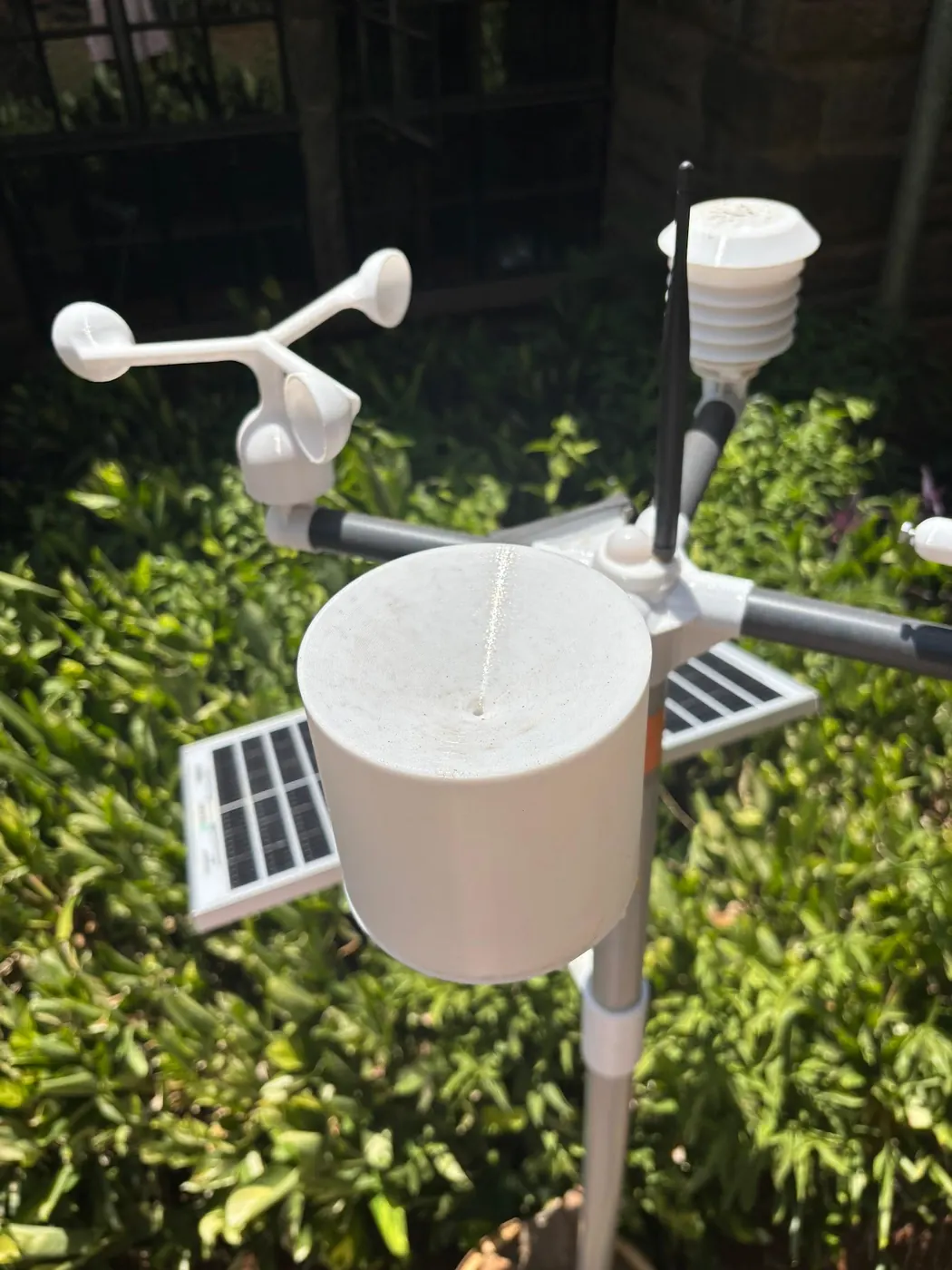
Measured by NuaSense weather stations and soil probes on Kenyan farms, over the period stated with each figure. Past readings, not a forecast.
The decision as it arrives at the agrovet counter
The choice usually comes late. Planting is near, cash is short, and a bag of fertiliser sits on a shelf. The World Bank's note on input finance and credit systems is built around exactly this gap. The One Acre Fund article on agriculture financing puts the consequence plainly: the majority of smallholder farms in Sub-Saharan Africa are wholly rain-fed. So if farmers cannot get capital in time for planting, they either plant late or miss planting completely.
That sentence names the first cost of not having credit, and nobody prints it on a receipt. A late planting is a yield cost. A missed planting is a whole season. Any credit product has to be weighed against that, not against an imaginary farmer with cash in hand.
But credit also has its own cost, and it hides outside interest. The FAO guide for extension officers on inputs and paying for them lists input suppliers by what they do to the price: different producers, different importers, a retailer near a bus station who may charge more, a town short of urea where the retailer can raise the price. None of that is interest. All of it lands on your acre.
So the decision breaks into two parts. Where the money comes from, and what price you pay while using it. Farmers tend to compare only the first. The rest of this piece keeps both in view, and takes a position at the end.
One acre, one season: the template that makes terms comparable
Take one acre. List what you buy: seed, basal fertiliser, top-dressing fertiliser, and bags for the grain if you buy them. The FAO guide defines inputs for its purposes as seed, fertilizer, storage chemicals and bags for grain. That is a useful checklist, because the last two are often forgotten when a credit offer covers only the first two.
Now fill in four numbers for every option. First, what the basket costs in cash on the day. Second, the price you are quoted under the credit arrangement for the same basket. Third, any fee or deduction named in the agreement. Fourth, when money leaves your pocket compared with when you planned to be paid. The extra cost of credit is the second minus the first, plus the third. The fourth tells you how long you were borrowing.
No shilling figures here. None of the sources carries a Kenyan price for a basket or a quoted credit premium. So get your own quotes. Start by asking for the cash price in writing. Many sellers will name one price and leave you to assume that is the cash price.
Two warnings about the template. Stick to the same brand and the same grade, or you end up comparing producers instead. The FAO text says plainly that retailer prices differ partly because the product may come from a different producer. Also write down the date of every quote. A shortage in town moves the price inside a season, so a March cash quote and an April credit quote are not a comparison.
Cash, and why it is not free
Cash sets the baseline, and that baseline is not free. A farmer paying cash usually saved the money first. That cash was not working anywhere else, and often it means buying in small lots. The One Acre Fund article tells of a Burundian farmer, Angelo Hafashimana, who bought around 10kg of fertilizer whenever he could afford some. That is Burundi, not Kenya, but you will spot the same piecemeal buying at any agrovet.
Piecemeal buying costs you twice. Every trip eats time and fare. The FAO guide puts the retailer's side of it: he needs a good deal of capital and will not let it stay tied up after top-dressing time, so he stocks conservatively. Delay your buying to the last minute and you may find every retailer in town has run out.
So cash can cost you most in a bad week and least in a good one. Plan ahead as a cash buyer and you can ask for the best price; the FAO guide tells extension officers to shop all input suppliers for it. Cash is the only position with the bargaining power to do that without a lender's terms attached.
On the one-acre template, cash scores zero for the credit premium and zero for the borrowing period. The cost sits somewhere else: in timing risk and in what that saved money could have done. If the cash is in your hand on time, the comparison starts here. Every other option then has to beat it by delivering something cash cannot.
Agrovet book credit
Book credit is the arrangement you see most and the one with the least paperwork. The agrovet writes down what you took; you settle later. Not one source behind this piece gives a Kenyan agrovet's credit terms, so any premium figure would be made up. What we can say is how to work it out.
Ask for two prices on the same bag, cash and book, and write both down. If the seller will not name two prices, that tells you something. Then ask when the balance is due, whether it is still due if the crop fails, and what happens if you pay late. The gap between the two prices on one acre is your premium in shillings. Divide it by the months you hold the debt and you get a monthly cost to compare with a sacco's.
Sellers are careful with credit for a reason, and the FAO guide points to history. Before structural adjustment, seasonal maize credit was a big line in government budgets. Agricultural banks got poor repayment and couldn't stay afloat. If harvest failed, many farmers brought in no maize and didn't pay loans. Even in good years, farmers often dodged repayment. A lender who remembers that will build the loss into the price.
That same history is why a seller wants you nearby. Your agrovet knows you, your farm and your neighbours, and that knowledge works like collateral. But the relationship also locks you into one seller's prices. That kills the shopping around the FAO tells you to do. A seller who has you fixed has no reason to compete for your business.
The sacco loan, priced as a loan
A sacco loan is the one option that acts like a financial product, so it is the easiest to price clearly, as long as the sacco gives you the repayment schedule. Ask for the total you will repay, not the rate. Then subtract what you borrowed. The difference is what the loan costs on your acre, in shillings, fees included.
The sources have no sacco rate, so no rate shows up here. But they do show one structural fact. The FAO guide on paying for inputs says that after financial sector liberalization, financial institutions pulled back from lending directly to small farmers. That left a broad institutional gap in rural credit supply, and banks treated small-scale farmers as high-risk. When that gap bites, many farmers turn to cooperatives and savings groups.
A loan gives you money, not inputs. That matters. You buy at cash prices, and that is a point in its favour: the sacco loan lets you act as a cash buyer and shop around. The cost is the loan's own charge, plus the wait for approval. If approval comes after planting, the cheapest loan on paper becomes the dearest in practice, because of the late-planting cost described earlier.
Access is another question. Lending depends on membership and history. The One Acre Fund article notes that 29% of Kenyan women still cannot get basic financial services. A sacco may be within reach for one household member but not another.
Pay-as-you-go and digital credit
Pay-as-you-go schemes and mobile digital credit promise to do away with the lump sum. Terms differ by provider, and the sources have no Kenyan scheme's terms. So the method does the work again: ask for the total you will have paid at the end, subtract the cash price of the basket, and call the difference the cost.
The best evidence behind this piece on digital input credit is not from Kenya. The Berkeley CEGA randomized trial in Ghana gave farmers input credit through a mobile application. Two findings matter. Where the credit arrived on time, the study reports large increases in output, crop sales and profits. And increases in spending on complementary inputs like insecticides, land rentals and hired tractors had no average effect on output, sales or profit.
Put yourself in the farmer's seat. What mattered was when the credit came, not how big it was. Money that lands after planting does not buy much. You cannot take the Ghanaian credit size and apply it to Kenya, and this piece does not. But the delivery-date lesson holds: ask the provider when the money or the inputs reach you, and get it in writing.
Policy is heading this way. Kenya's agricultural sector transformation strategy, as laid out in the Ministry's financing and subsidy policy framework, aims at about 80% private sector participation and inclusive financing such as e-vouchers, digital credit and agro-insurance. That is an aim, not a finished market.
Input-for-harvest arrangements
Here, you get the inputs first and pay from the crop. The FAO guide lays out two forms. In outgrower schemes run by private agribusiness traders, you receive inputs and a guaranteed price before planting, and the credit is taken out of crop sales at harvest. Barter deals exchange maize or another crop the buyer accepts for inputs, with no cash involved. Usually, you must hand over the produce before the inputs are released.
Work out these costs another way. In an outgrower scheme, the cost sits inside the guaranteed price. Compare that price with the open market price you would likely get. Multiply the difference by the bags per acre you expect. That gives you a cost that never shows up as a fee. The previous piece on where farm-gate money goes explains why the open price is hard to pin down anyway. So record what buyers in your area paid last season.
With barter, count the bags you give up. Price them at the harvest price. Compare that with what the inputs would cost in cash. Since the produce goes first, you also pay for storage and for the harvest-time price.
One limit matters a lot. The FAO guide says outgrower schemes work best on cash crops like cotton and tobacco. It notes few examples to date of successful schemes with staple food. If you grow maize, look hard at any scheme that offers a guaranteed price: you may be signing a promise the buyer has not historically been able to keep.
Where the terms are hard to find out
To put it plainly, most Kenyan farm input credit does not come with published terms. The research behind this piece shows that. Fifteen sources covered FAO, the World Bank, Kenyan ministries, a county policy and a randomized trial. Not one gives a shilling premium for agrovet credit or an interest rate on an input loan.
That is a finding, not a hole in the research. It means a farmer cannot look up the price, and the seller knows more than the buyer. The cost drivers named are all things you can check yourself: whether the retailer is near a bus station, whether your town is short of urea, how late in the season you buy, and whether you can get the quote in writing.
Lenders carry risk too. The old repayment history in the FAO guide shows where that road leads: poor repayment, then withdrawal from small farmers. You cannot open a lender's books. You can still read the terms. A shorter due date, a demand for a deposit, or a refusal to quote a total all push that risk onto you.
Make your own table. Four columns: cash price, credit price, fees, date due. Use it for every offer. When a seller won't fill a line, leave it blank, and treat that blank as a cost.
Who gets credit, and who sets its price
Terms don't come from arithmetic alone. They follow trust: who the lender trusts. The ILRI and University of Edinburgh study of farmer-to-farmer extension, done in Oyugis, Rongo, Vihiga, Homa Bay and Siaya counties, found that lead farmers are encouraged to earn money by selling inputs and services to their peers. So a neighbour can be a supplier. A neighbour's terms may be gentler than a shop's. Then again, they may not.
That same study found that people with high bonding social capital are often men. It recommends interventions to strengthen bonding social capital among female farmers. Set that beside the 29% of Kenyan women without basic financial services, and the mechanism is plain. When credit moves on trust inside a network, anyone outside it pays more or gets nothing.
The state sets prices too. The Murang'a County farm inputs subsidy policy describes a shift in the subsidy: away from physical procurement and delivery, toward electronic e-voucher and e-cash payment. The CGIAR paper on agricultural inputs in Kenya describes a nationwide e-voucher model meant to widen access over the next six years. Intended matters here. It is not yet something you can count on for this season.
Putting the five side by side
The list below puts each option into the four numbers from the template. If the sources have no Kenyan figure, the entry says so instead of guessing.
- Cash. Credit premium: none. Money leaves: at purchase. Main risk: running out of cash or stock at the critical week, and buying in small lots. Hidden cost: your own savings.
- Agrovet book credit. Credit premium: not published anywhere in our sources, so ask for a cash and a book price on the same bag. Money leaves: at the due date the seller sets. Main risk: being tied to one seller's price.
- Sacco loan. Credit premium: total repaid minus amount borrowed, from the sacco's schedule. Money leaves: by instalment. Main risk: approval arriving after planting.
- Pay-as-you-go or digital credit. Credit premium: total paid minus the cash basket price. Money leaves: as the scheme specifies. Main risk: late delivery, which the Ghana trial links to the benefit.
- Input-for-harvest. Credit premium: the gap between the guaranteed or barter price and your likely open market price, times your bags per acre. Money leaves: at harvest, or before release in barter. Main risk: staple crops have few successful examples.
The columns that decide the winner differ from farmer to farmer. If you have a good relationship at one agrovet and a risky season, book credit may suit you. If you can use a sacco and have time before planting, price the loan and buy at cash prices. If you grow maize and someone offers an outgrower deal, be sceptical.
The position this piece takes, and its condition
If you can get money before planting, a loan you can price and then use as cash usually gives you the most control. It makes you a cash buyer who can shop around, which is what the FAO guide recommends. Book credit is the fallback when timing matters more than price. That fallback is fair: the Ghana trial points to timing as where the gain comes from.
For maize, input-for-harvest is the last option to look at. Before that, write down the guaranteed price beside the open price. The FAO text says straight out that staple food schemes have few successes. Old repayment failures are the reason. If a promise has no named track record, treat it as an unknown, not as a favour.
One condition applies. None of this holds unless you do the arithmetic with real quotes. The sources give no rate, and this article cannot either. If nobody will tell you the total you will repay, you already have your answer on that offer.
Whichever way you go, protect the purchase itself. Credit on a fake bag is a loan taken out against a loss. Before you sign anything, read the post on how to spot fake fertiliser and seed before you pay. If the product is bad, the debt does not shrink.
A final point on equipment. A weather station or soil probe is a different kind of buy. It is a tool you keep, not an input you use up. NuaSense lists its prices: KES 30,000 for a weather station and KES 7,000 for a soil sensor, with variants at KES 9,000 (two moisture and two temperature channels) and KES 10,000 (which also measures EC), all excluding taxes. The payment date is one month after the station is installed and transmitting, and a money-back guarantee applies in the first three months. That term is short and stated, which is more than most input credit offers give.
For the production side, NuaSense has a longer piece. How to Increase crop yields in Kenya goes through soil fixes, water strategies, seed choices and precision tools that are already making a difference for Kenyan farmers.