You have heard the advice about agrovet prices in Kenya: skip the first shop and buy from the second, because the bag costs less there. On paper, that is simple arithmetic. It is arithmetic, but only if you are a farmer buying one bag, paying cash, today, and you have no reason to use that shop again. Few farmers on a commercial block fit that. This piece follows the advice back to its assumptions and asks where each one fails on a Kenyan farm.
Start with a limit. The sources for this piece carry no fertiliser price, no price gap between two agrovets, and no distance between shops. Put any number like that here and it would be made up, so none is included. What they do give is the market structure those shops operate in, a way to measure price differences, and a template for tracing costs. That is enough to reason from, and the reasoning is the useful part.
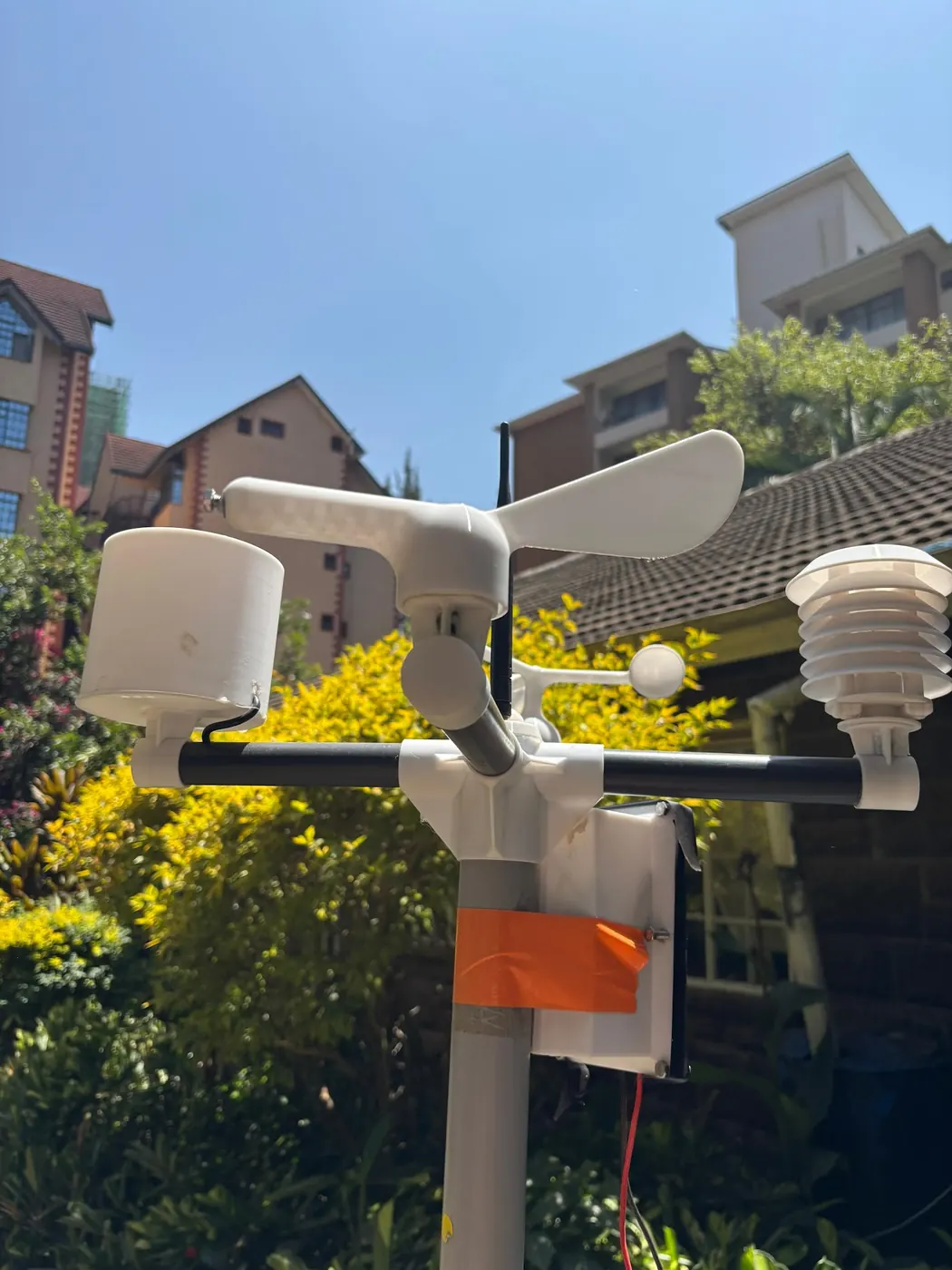
Measured by NuaSense weather stations and soil probes on Kenyan farms, over the period stated with each figure. Past readings, not a forecast.
The sticker is one line of a longer bill
Comparing a shelf price between two shops only works if every other part of the purchase is the same. It seldom is. The counter price is just where your cost begins. On top of it sit getting the bag home, how you pay, what happens if it turns out wrong, and how much you are forced to take.
Those four are where the cheaper-counter rule breaks down, and the sections below deal with each one. You do not need a price to understand any of them. Each one needs a question you can ask the dealer, or ask your own records, before you pick a door.
A crowded retail market produces uneven prices
A paper on a retail agro-vet application system hosted by Narok County calls the agrovet business a retail business under the pharmaceutical category. It puts major agro-veterinary retailers in Kenya at approximately 9000, with expected growth of 30 percent over the next two years. Two cautions here. Those are agro-veterinary retailers, not fertiliser-only shops, and the growth figure is an expectation, not a count.
Even so, the shape tells you something. Thousands of independent retailers, many adding capacity, each buying from a supplier on their own terms, each carrying their own rent and their own idea of margin. In a market like that, the surprise would be identical prices at every counter. Differences are just what independent pricing looks like.
It also says something about the cheap shop. A retailer pricing low may be winning customers in a crowded field, which is good for you, or clearing stock, which may not be. The sources cannot say which, and the sticker cannot either. Questions at the counter can.
Following a cost from the factory gate to the shelf
You can use a template to see how an input cost reaches a counter. The Competition Authority of Kenya's animal feed market inquiry analysed supply, pricing, and costs, including costs of the main inputs. It covered the chain from inputs through to the end buyers, with dairy and poultry as the two largest consumers.
That work concerns animal feed, not fertiliser, and it did not look into fertiliser pricing. What carries over is only the method: do not stop at the final price. Trace it back stage by stage and ask what got added at each point. A bag that changes hands more times, or stays in a warehouse longer, may land at a higher price for reasons that have nothing to do with product quality.
In practice, you only need to ask a dealer one thing: where did this stock come from, and how long ago did you buy it? A shop that restocks often and one clearing old purchases may sell the same brand at different prices, and for entirely different reasons. What you carry home is not written on the label.
Getting there costs money before the bag does
Usually the cheaper counter is the one farther away. If it were near, its price would be common knowledge at the nearer shop. We have already covered that journey on this site: the piece on whether the cheaper fertiliser in the next county is worth the trip counts the drive as part of the price, while the post on why fertiliser prices differ between Kenyan counties deals with the spread across counties.
For a block manager, the point is this: a trip has a cost per bag only once you divide it by the bags you carry. Take one bag on a long drive and the saving disappears. Fill a lorry and that same drive costs close to free per bag. So the answer flips between a smallholder and a large farm, and neither is wrong. A neighbour's advice about the cheap shop may be correct for his order and wrong for yours.
One recent signal makes this clearer. In its reporting on September inflation, Business Today Kenya noted petrol and diesel up 15.8 percent and 26.9 percent annually, with transport following the same path. When fuel moves like that, the distance worth driving for a saving gets shorter. A comparison you made last season is out of date.
Also count the driver's time and the vehicle's wear, not just the fuel. If the vehicle would otherwise be earning, the trip has an opportunity cost that never shows up on a receipt. And if the cheaper shop opens only at hours that cost you a half day, put that half day into the sum too.
We have an earlier piece on what transport to market costs per bag. It runs the same arithmetic the other way, for bags leaving the farm. Use it to get your own figure for the haul before you compare counters.
Credit changes which price you are comparing
In its second excerpt, a CGIAR report on gender in agricultural services records that lowering prices and providing seeds on credit would be required. Farmers also pointed to a need for capital to set up agrovet shops where seeds are sold or supplied. That concerns seed, not fertiliser, and it describes demand, not a measured price. Still, it names what growers ask for alongside a lower price: credit.
Why does this matter for the cheaper-counter rule? A shop that sells for cash at a low price and a shop that lets you pay at harvest for more are not selling the same thing. One hands over a bag. The other hands over a bag plus a loan. If your cash comes in after the crop, the credit counter's price may be the only price you can pay.
There is no interest rate or credit term in the sources, so no premium is guessed at here. Work it out yourself. Ask each shop for the cash price and the on-account price. Treat the difference as the cost of borrowing. Then compare that with what a loan from anywhere else would cost you, and with the date you will actually be paid. Sometimes the credit counter is dear. Sometimes it is the cheapest money on offer.
There is another effect. A shop that has given you credit knows you and wants you back next season. That can show up as flexibility when a payment runs late. A cash-only shop owes you nothing after the sale. Neither relationship is free. A relationship has a value you can judge only from your own history with the dealer.
A bad bag is only cheap if someone takes it back
No source in this bank measures how often a bag turns out faulty, so there is no rate to quote. One thing can be said: this is structural. A price is worth less if the seller will not stand behind the product. The same shelf price at two counters is not the same offer if only one will exchange a bag that turns out wrong.
Our piece on spotting fake fertiliser and seed before you pay covers the physical checks on the sack and the dealer. Here the point is only about money. Ask what happens if the bag fails. Ask before you pay. A dealer with fixed premises, a receipt book and a returns habit carries a cost. You are partly paying for that in the price.
Look at what the cheaper counter might be saving on. Part of a gap can come from a shop that carries no stock risk because it will not take anything back. That is a legitimate way to run a shop. It just moves the risk to you. A manager buying for a whole block should price that risk in, not discover it at planting.
Pack size and how much you must buy at once
A lower price per bag at a counter that sells only in large quantities is no help to someone who needs part of one. The reverse holds too. A shop that splits a purchase suits a block with staggered needs, and it charges for the convenience.
For a commercial grower the question is different. Volume gives you something to negotiate with, and the shelf price is often just the start of a conversation. The sources do not say what discount an order earns. Asking costs nothing, though. The shelf price is what the customer who did not ask gets charged.
Storage counts in that same total. Buy early when the price is low and you are holding stock, which means a store, a chance of damp and money tied up. If you have no dry space, part of what you saved on the low price goes into keeping it.
Measuring the gap properly, the way price monitors do
To find out whether the gaps between your local shops are real, copy what a price monitor does. The Food Price Monitor for Kenya, developed for the Food Security Portal and facilitated by IFPRI comes out monthly. It aims to give clear and accurate information on commodity price trends and variations in selected markets. It does not track fertiliser specifically, so it gives no input price. What it gives is a method.
The method is repetition. One trip to two shops only tells you what happened that morning. Keep a record of the same bag, in the same pack size, at the same few shops, each month. Then you can see whether the gap holds steady or flips. If the cheaper shop is cheaper every time, that is a pattern. If the two swap places, you were comparing noise.
Put down more than the price. Note the date, the brand, the pack size, cash or credit, and whether the dealer would give a receipt. Most people skip the column for transport you would have spent. Three months of that beats any rule of thumb, this article's included.
What the Kitale agrovet study can and cannot tell you
The only retail-level agrovet evidence in these sources comes from an MBA project at Kenyatta University, submitted in November 2021: the study of social media usage and the performance of the agrovet sector in Trans Nzoia. It surveyed small and medium agrovets in Kitale town. The sample was random, 56 enterprises, and 72 percent of owners and managers responded.
It found that social media usage had a 69 percent positive impact on agrovet performance, measured by the number of customers received. That is not a price finding. It says nothing about fertiliser, margins, or why one counter charges more than the next. The study itself recommends further work on financial effects. Anyone who quotes the 69 percent as a pricing result is misreading it.
What it suggests, carefully, is that shops compete for customers in ways other than price, and some advertise online. A dealer's page may show a list. Treat that as one more place to gather a quote, then verify it at the counter.
When chasing the lower price does pay
It pays when the quantity is big enough that the trip, divided across the bags, comes to little. It pays when you can pay cash and the cheaper shop is not asking a loan's worth of premium from the other. It pays when both shops stand behind the product and you hold a receipt either way. And it pays when your own record shows a stable gap, not one lucky morning.
It does not pay to buy a single bag when the cheaper counter is far away, when the saving is the price of having no returns policy, or when you need credit that only the dearer shop offers. There, the dearer shelf price is the cheaper purchase. The dealer is not overcharging you. They are selling something else along with the bag.
So the rule is not to buy dear. It is to refuse to compare a sticker with a sticker. Compare what you carry home, the terms you get, and what recourse you have. Our maize growing guide includes costs per acre. Once you know your own per-bag cost, that is the number to set these input choices against.