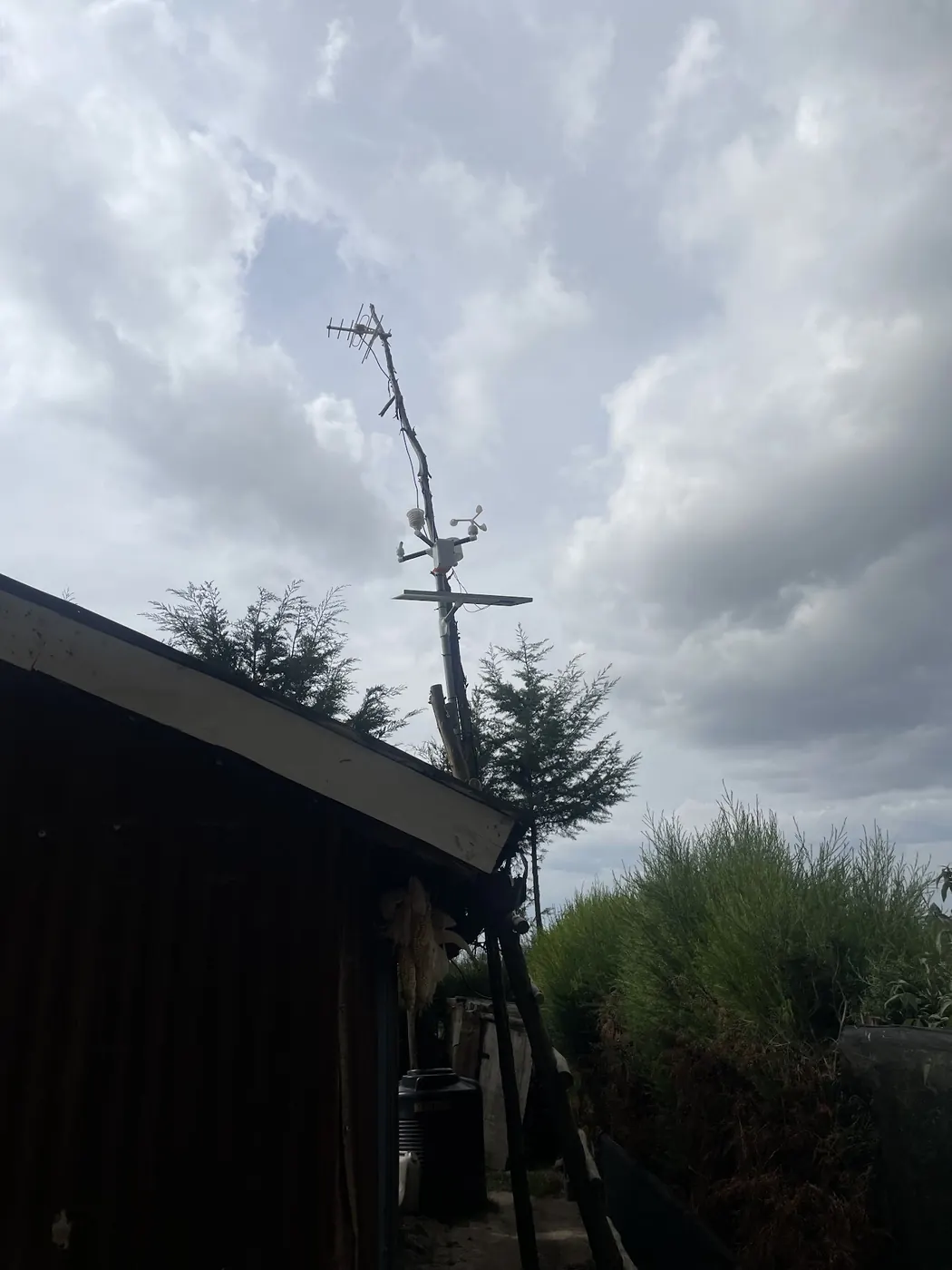
Measured by NuaSense weather stations and soil probes on Kenyan farms, over the period stated with each figure. Past readings, not a forecast.
No Kenyan rate table survives checking, so build your own
Ask anyone in Kenya what a day of casual farm work costs and the answer comes from the person you asked. It is true for their village, their season and the week they last paid it. Check any published table of farm labour cost by region in Kenya and it will not hold up. None of the sources behind this piece gives a daily rate for planting, weeding, spraying or harvest anywhere in the country. This article will not invent one. Instead, it gives you a structure for building that table from your own payments and tests to use when a contractor or service provider quotes against it.
That gap matters. Surveys elsewhere do exactly what we lack. American custom-rate reports gather thousands of quotes a year and publish an average, a most common figure and a range for every field operation. Kenya has nothing comparable for hired hands or tractor hire. A manager budgeting next season works from memory and from the last conversation at the agrovet counter. Memory inflates last year's harvest wage and forgets the day the crew did not turn up.
So the labour cost per acre on your block is a number you own. You do not look it up. Where the evidence below comes from Iowa, Nebraska, Mississippi or a colonial-era survey, the paragraph says so. It also says what changes on a small block worked with a knapsack sprayer and a hired ox team.
Who turns up when you hire
Where workers come from decides your bargaining position more than any rate card does. Start there. FAO's chapter on Kenya's changing rural capital and labour markets found that in the smallholder agriculture it studied, hired labour supplied fewer than 10 percent of labour inputs. It also found that between 50 and 75 percent of hired labourers were landless or near-landless. An Embu District tea survey in the same chapter found over 90 percent of pluckers had no land of their own and plucked mainly on holdings belonging to relatives.
Two things follow. Most work on a smallholding is still family work, so the cash line for labour understates the true bill. Move from family to hired hands, say when a son leaves for Nairobi, and the cost jumps from zero on paper to a real wage. The margin looks as if it collapsed when nothing in the field changed. Second, those available for hire are mostly people with no land to fall back on. They need the cash the week the work is done. A crew paid late goes to the neighbour next week. In a peak weeding fortnight, that is the dearest saving you will ever make.
Relatives plucking for relatives is still labour. On an estate, it would be a wage. Whether you pay a cousin in cash, in a share of the crop or in the right to cultivate a corner of the shamba, write it on the same line as the hired crew. A budget that counts only strangers is counting roughly a tenth of the work.
Work parties and women's groups: labour paid in beer, days and land
Kenya's oldest labour market was not a wage market. That same FAO chapter describes the Kikuyu work party, the wira. For digging or weeding it could enlist as many as 80 people, and the organiser had to provide beer and often food. Alongside it ran ngwatio, groups of three to ten women, not necessarily related, working day by day on each other's plots. Squatter labour on settler land was legislated at 180 days a year, later raised to 270, with family cultivation capped at two acres.
Versions of all three survive. A merry-go-round group weeding members' plots in turn is ngwatio under a new name. A harvest where neighbours come and you slaughter a goat is a wira at smaller scale. A worker who lives on the farm and gets a plot in lieu of part of the wage is the squatter model. It is voluntary this time, but still a labour cost paid in land.
None of this comes free. Beer and food for a work party are real costs. And the days you owe the group fall due in the same peak week your own field needs weeding. Set each one down on the sheet at what that same work would cost if you paid cash. If the swap still comes out cheaper, keep swapping; most times it will. But you only know that once there is a number against it, and you are the one who sets that number, from what local labour actually goes for.
Digging, planting, weeding, spraying, harvest: price each task separately
For most of the season, a day rate is the wrong unit. In the FAO survey of what it calls peasant-elite crops, English potatoes and wheat, men did the heavy digging while women did the planting, weeding and harvesting. That split is old, and it is shifting, but it still tells you something. Different tasks draw on different pools of workers, and those pools are free at different times. A single blended day rate hides the fact that the digging crew and the weeding crew are negotiating from very different positions.
So split the sheet. Land preparation is the one job where a machine or an ox team goes head to head with hand labour, and the one where a per-acre task rate is easiest to agree. Planting and weeding are usually bought by the day or by the row, and the price moves with how many other farms in the location are at the same stage. Harvest often goes per bag, per crate or per kilogram, which pushes the risk of a poor crop onto the picker. Spraying is a half-day job, and it needs a trained operator and the right conditions.
Spraying needs its own line, for a reason the wage does not show. You are paying for a window as much as for a person. Across 14 NuaSense weather stations over 02 October to 01 November 2026, only 22 percent of station-hours scored 60 or better on our spray window quality index, and 55 percent scored below 30. That index runs from 0 to 100 and is computed hourly from each station's own readings. Pay a sprayer for a day when most hours are poor and you have wasted the wage and the chemical. Our IoT farm sensors earn their place here by telling you which half-day to book, not by replacing the operator. Harvest carries a similar hidden cost: pickers paid per bag will move fast on a wet morning, and the bag you then pay to dry, or lose to rot, was cheap labour that turned expensive in the store.
A per-acre labour sheet you can fill in on a phone
Once the tasks are split, the budget is arithmetic. No figures appear below, because none exist in a source; every one comes from your own last payment or the quote you were given this week.
- List every operation from land preparation to the last bag in store, including those a relative does for nothing.
- Against each, write the unit it is actually bought in: person-days, rows, bags or acres.
- Write how many units an acre needs. Use last season's count, not a guess, and if you did not count, start this season.
- Multiply by the rate you last paid for that unit in that location. If you paid in food, transport or a plot, write the cash it would have cost.
- Add your own labour at the rate you would have to pay to replace it.
- Total per acre, then set machine and service quotes beside the lines they replace.
Now two things show that a lump-sum memory hides. Peak lines, usually first weeding and harvest, dominate the total, and they are also where crews are scarcest. And once the self-labour line is priced, the crop often looks thin. Uncomfortable, but it is the same sum the piece on farm gate, market or aggregator and where the money goes ran on the selling side: a margin that exists only because a cost was left off the page is not a margin.
Keep the sheet by location, not by county. Labour prices belong to a market centre and a stage of the season, and a figure from the next ridge may already be wrong. Farm in two places and you keep two sheets, much as the post on cheaper fertiliser in the next county argued that a price is only a price once you add the cost of reaching it.
Reading a contractor's quote: the 20 to 40 percent rule
When a tractor owner or a spray-service provider quotes you per acre, you need a way to tell a fair service rate from a number pulled from the air. Mississippi State Extension's guidance on custom rates gives the owner's side of the sum: for custom work to pay, the rate must cover the machine's fixed costs and the direct costs of fuel, labour and repairs, plus a return, and earlier reports put that markup at 20 to 40 percent above the cost of operation. It was written for Mississippi contractors, but the logic is arithmetic rather than geography. Work out what it costs the owner to run the machine over your acre. A quote inside that band is a reasonable service. A quote above it tells you the operator has more customers than machines that week. A quote below it tells you wear and breakdowns have not been priced, and that the operator may not be in business next season. That matters, because you want the same tractor back next year.
On a Kenyan ridge, that estimate is harder to do than in Mississippi. There, fuel, repair and depreciation tables are published. Here you build it from the operator's own diesel use per acre, the current rate for a driver and an estimate of wear. Ask the operator straight. A serious one knows the litres per acre and will tell you.
The same guidance lists the risks a hirer takes on. Kenyan growers know them already: timeliness, the quality of the work, and weeds or insects carried on the implement from the last customer's field. Its advice is to secure the operator and settle the actual expense before the crop goes in, not to start phoning around once the rains have broken. It lists lower capital and labour costs and the ability to finish on time as benefits. On a small block, timeliness is the whole argument.
The people providing these services are changing. In Oyugis, Rongo, Vihiga, Homa Bay and Siaya, a smallholder dairy area, an ILRI study of farmer-to-farmer extension found lead farmers were encouraged to earn income by selling inputs and services to their peers. A local service market is forming, and many of your quotes will come from it. The same study warned that a trained lead farmer may not be effective where social capital is low. The Kenya agricultural sector extension policy itself states that public and private extension has been mostly ineffective. Buy the service on price and track record, not on the title.
What a real custom-rate survey looks like
American surveys come closest to a published price list for labour and machines. What they contain shows you what is missing here. Nebraska's custom rates report for 2025 field operations gives a state average of 18.54 US dollars per acre for disk harrowing. The most common rate is 16 dollars, and the range runs from 10 to 48 dollars. Row-crop planting without coulters averaged 23.94 dollars per acre, with a range of 15 to 30. Those are Nebraska prices for Nebraska machines on Nebraska fields. Nothing about them transfers to a Kenyan acre except the shape of the data.
The shape is the lesson. For one operation, the dearest quote was nearly five times the cheapest, 48 against 10. That spread exists in a mature market with thousands of responses. On a Kenyan ridge with three tractor owners and no survey at all, the spread will be at least as wide. A single number from a neighbour tells you almost nothing, and that is why this article refuses to print one.
Two more findings are tools, not prices. Nebraska's report ran an ownership example. A 230-horsepower tractor with a no-till planter came to 31.96 dollars per acre, which the report says is 6.96 dollars above the statewide custom average for that operation. For a farm of the size in the example, owning was dearer than hiring. The 2026 Iowa farm custom rate survey, built from 205 responses and 4,698 rates, found that a 0.50-dollar-per-gallon rise in diesel lifts total machinery costs by roughly 5 percent. Kenyan figures differ, but the rule holds. If a contractor's quote has moved and the diesel price has not, fuel is not the reason. Only 3 percent of Iowa farmland is fully custom farmed. Hiring an operation is common. Handing over the whole farm is not.
The watchman: a Kenyan test for any added wage
One Kenyan experiment puts a price on a labour line most budgets leave out. It also shows how to test whether an added wage pays. A World Bank impact evaluation post on fear of crime and agriculture describes a Migori County experiment that mobilised 230 watchmen for 600 farmers across 76 villages during the 2018 to 2019 short rains. Take-up was about 85 percent, and farmers paid roughly 2.50 US dollars a week. Farmers in the study were particularly afraid of theft when growing high-value or unusual crops. Leaving the farm for off-farm work was seen to raise the risk.
The results are the useful part. Value of production per farmed acre rose by about 15 percent of the control mean. That is roughly 5,000 KSH per acre and about 15,000 KSH for the mean farm. Watchmen wages came to 18,000 KSH. On the post's own reading, the private benefit did not clearly justify the cost. That is the honest conclusion: a wage of 18,000 against a gain of 15,000 is a loss on the farm's own books, even though the gain per acre was real.
There were other returns too. In the intervention group, farmers had about half as many arguments with neighbours over farm interference, and only 40 percent as many disputes that involved threats or aggression. That has value, but it does not show up in the crop ledger. Take the same test to every labour line you think of adding, from a second weeding to a permanent herdsman. Write the expected gain per acre, multiply by acres, then set the full wage against it. If the wage comes out bigger, the line needs a non-cash reason to stay. Name that reason before you pay. Security is one line where a Kenyan farm has actual evidence. Most others you will have to measure yourself.
The wage you do not pay still costs someone
A true-cost study from CGIAR on the social and environmental costs of food in Kenya surveyed 1,502 households and 1,056 farm workers. In Kisumu, Kajiado and Vihiga counties, it put external costs, the ones the farm does not pay, at about 30 percent of all production costs. Within that external share, social costs were 84 percent and environmental costs 16 percent. At country level, the crops sector splits 90 percent social to 10 percent environmental. That is a different measure on a different scope, and the two should not be combined. Either way, in Kenyan cropping the unpaid cost falls mostly on people, not on soil or water.
Any farm manager will recognise how this works. When commodity prices are low and direct costs are high, producers cut what they can. The easiest line to cut is the hired wage. Labour is a big share of direct costs, so farmers swap family for hired workers. On smallholdings that can mean more child labour. Vihiga's County Director of Agriculture is quoted saying women and children bear the brunt. Women tend the farm, go out for manual work, and run the household on top. A companion CGIAR paper on the gender dimensions of true costs puts the gender wage gap at 12.8 percent of total external costs. It also finds female farmers invest 36 percent less in inputs than men.
For a grower, this means two things. Check casual rates against the agricultural minimum wage gazetted by the Ministry of Labour. A budget built below it is built on a liability. If you hire a spray service, ask whether the operator is registered with the Pest Control Products Board. The cheap unregistered sprayer is cheap because someone else carries the risk.
Four ways to get an acre worked, side by side
Put plainly, a grower has four ways to buy the same work. No rates appear here. The rates are yours to fill in from the sheet above.
- Family and reciprocal labour: cash cost near zero; real cost in food, days owed and land given up; buys flexibility and trust; risk is that days owed fall in your own peak week and that unpaid work lands on women and children, as the Vihiga evidence shows.
- Casual labour by the day or task: cash cost set by the local market that week; buys a crew now with no capital tied up; risk is availability at peak, quality on piece-rate work, and the gazetted minimum wage as a floor you must clear.
- Hired machine or service per acre: cash cost is the contractor's operating cost plus a 20 to 40 percent margin if the quote is fair; buys timeliness and no capital; risk is the operator's calendar, work quality and weed seed on the implement.
- Owning the machine: capital up front, then fuel, repairs and an operator whether or not it works; buys control of timing; in the Nebraska example it cost more per acre than hiring, and a small Kenyan block with few acres to spread fixed cost over points the same way.
My position: for land preparation, and for wheat harvest on blocks big enough to justify a combine's journey, hire the machine and lock in the operator before the season. Timeliness is worth more than the margin you pay. The NuaSense guide to growing wheat in Kenya covers KALRO varieties, planting and harvest timing by zone. This labour decision sits on top of that calendar, not inside it. For weeding and planting, casual labour paid by the task is still right on most smallholdings. Spend on prompt payment, not a machine. For spraying, buy the window and the trained operator together. For any new wage line, run the Migori sum first. Write down gain per acre, times acres, against the full wage.
Often the right choice is to buy nothing at all. If your own sheet shows family labour covers weeding at a cost you can bear, do not hire a crew to look modern. If a tractor owner is two ridges away, do not buy a tractor. The cheapest choice is usually the one you can defend with your own numbers.