Measured by NuaSense weather stations and soil probes on Kenyan farms, over the period stated with each figure. Past readings, not a forecast.
The offer, as it reaches the farm gate
Most contract farming in Kenya begins the same way. A company field officer, or a chief's office working for the company, arrives with a form, a promise of seed and fertiliser on credit, and a price. The price sounds good because it is spoken out loud, while the deductions are not. A World Bank briefing on contract farming defines the arrangement simply: farmers produce under agreement with buyers for their outputs. A Kenyatta University thesis on contract farming participation calls it a vertical integration scheme brought in to create market opportunities and raise smallholder incomes. Both are true. Neither tells you whether this form, from this buyer, will pay.
The FAO guide to the advantages and problems of contract farming puts it more bluntly: an agreement between unequal parties, companies on one side and farmers who are economically weaker on the other. You bring the land, the labour and the right to say no. Five clauses decide the rest.
Read the attachment first, then the contract
One sentence in the FAO material matters more than any other, and most growers never hear it. The guide says policies and conditions controlling advances are normally described in attachments to contracts, not in the contract body itself. Advances are the inputs and services the sponsor supplies on credit. Interest, the recovery method, the price charged for each input and the order of deductions all live in that attachment.
That changes how you read the document. The page with the signature line is the summary. The attachment is the deal. If the field officer has the form but not the attachment, you have seen the price but not the cost. Ask for it. Ask for the schedule of input prices. Ask whether those prices are fixed at the start of the season or set when recovery happens, because a fertiliser price written down in March and one applied at harvest can be two different amounts, and the attachment says which one you will pay. A buyer who cannot show the attachment on a phone or on paper is telling you how recovery will go later.
Why insist on this? The FAO names the debt mechanism directly: farmers may become indebted because of production problems combined with excessive advances. Read that as two risks multiplied. A bad season on its own is survivable. An input package bigger than the crop can repay is survivable if the harvest is good. Put the two together, drought on top of a heavy advance, and you end the season owing the buyer with nothing delivered, and the debt rolls into next season's contract where it is recovered before you see a shilling. No contract causes a drought. An attachment decides whether a drought becomes a debt.
So the lighter the advance you accept, the smaller that multiplication. For most smallholders, the right call is seed and the essential sprays on credit, and fertiliser with cash. Sponsors themselves are moving in that direction too, for reasons a later section covers. A grower who cannot raise fertiliser money should at least know the advance figure before signing, not after the first deduction.
The price clause is the net, not the number on the form
Many contracts set prices in advance, and the FAO guide is right that this is the main reason a grower's price risk falls under contract. A fixed price is worth a lot when the open market collapses at harvest. But it is a gross figure. What reaches your pocket is that price multiplied by the weight the buyer accepts, minus the input advance, minus any transport or service charges in the attachment, minus a group levy if you contracted through an association.
Price clauses take three shapes. A flat fixed price per unit, set before planting. A formula tied to a market reference, often with a floor. Or a price the buyer announces at delivery, which is barely a price clause at all: it keeps every risk the contract claims to remove. FAO warns that sponsors may be unreliable or exploit a monopoly position, and a price set at the gate by the only buyer in the district is exactly that.
Work out the net figure before you sign, on your phone, in front of the officer. Take the price, multiply it by a cautious yield rather than the brochure yield, then subtract the attachment's input schedule, levies and transport. Compare what is left against what the open market paid for the same crop in your county last season. County market prices are free on the NuaSense dashboard and at agriculture-data.com. You don't need hardware. If the net is below the open market in a normal year, you are signing for the loan, not the price.
Quota: who sets it, and who can shrink it
FAO puts the grower's prime advantage this way: the sponsor normally undertakes to purchase all produce grown. Then comes the qualifier many people skip. It applies only within specified quality and quantity parameters. Quantity is the quota, the ceiling on what the buyer must take. Everything above that ceiling is yours to sell elsewhere, if there is an elsewhere.
The same guide names two ways a quota goes wrong. Inefficient management or marketing problems at the sponsor can mean quotas are manipulated, so not all contracted production is purchased. Staff of sponsoring organisations may be corrupt, particularly in the allocation of quotas. In practice the two blur. A factory that cannot sell its finished product finds reasons to collect less. The officer deciding whose load goes on today's lorry holds real power over who gets paid this month.
Your quota clause therefore needs three answers. Who sets the figure, and is it written into your contract or decided at the factory each week? What happens when the buyer collects less than the contracted quantity through no fault of yours: is undelivered contracted volume paid for, or does the loss sit with you? And what is the collection schedule, with who bears the cost of produce that spoils waiting for a late lorry? Perishables make this acute. In the Kenyan French bean case described in FAO's partnerships for growth material, beans for canning are grown between 150 and 230 kilometres from the factory because the production area's climate allows rain-fed growing. That distance is a transport bill and a spoilage risk, and the contract decides who carries both. A quota clause with no answer for the late lorry pays the buyer.
Grading happens at the weighbridge, so the weighbridge is the clause
Quality and rejection terms look fine on paper. They fail at the gate. Grading only becomes checkable at delivery, with the buyer's scale, the buyer's grader and the buyer's sheet. FAO's management checklist for sponsors says purchasing arrangements must be made so farmers can verify weights and qualities. That line was written to the company. Turn it round and it becomes your test of the contract. Does this document give me a way to verify what I am paid for?
Ask for four things. A written grade description a grader must apply, not a phrase like "acceptable quality". A delivery note you sign before the load leaves your sight, recording gross weight, rejected weight and the reason. A right to be present at grading, or to send someone from your group. And a dispute route that does not run through the officer who did the rejecting. FAO recommends farmer-management forums linking management and farmers or their representatives for negotiation, and notes they avoid many problems caused by poor communication. A forum that never meets is not one of them. Ask when it last met.
Rejection is where a contract either pays or quietly stops paying. A buyer with a weak market does not need to breach anything to cut purchases. The grader simply tightens. A rejected load then costs you twice, the crop and the advance that was meant to be recovered from it. Nothing in the FAO material gives a rejection percentage or a grade band you could write in as a safe limit. This piece will not invent one. What you can insist on is a written grade, a signed note and a second pair of eyes. In a dispute, your own record of what you planted and applied is the only evidence on your side of the scale. A notebook does most of that job.
Group contracts take their cut before you see the payment
Many Kenyan contracts run through a cooperative, a self-help group or an association rather than the individual grower. An AGRIS record of a study on Kenyan smallholder banana contract farming found participation driven by household head education, credit access, cooperative membership, irrigation and banana farm size. Membership is a route in. It is also a deduction layer.
The Colombian case FAO describes shows how this works. Passicol contracts blackberry, passion fruit and papaya to 14 work groups or associations of roughly 400 farmers. Those associations take their administrative and overhead costs out of the company's payment before they settle with members. That is not improper. But the price on the company contract is not the price the member receives. Colombia is not Kenya, and the lesson carries over: when a group stands between you and the buyer, you are in two agreements and have likely read only one. Ask for the group's rules on levies and on how shortfalls are shared. Ask what share of last season's company payment reached members. If a group cannot answer, nobody is accounting for that arrangement. Where the buyer allows it, contracting direct is the cheaper option.
The input package shrinks the season after someone abuses it
The sponsor normally supplies inputs and services on credit. That is what draws growers in, and FAO does not hide why it is unstable. Farmers may divert inputs to other uses, which cuts yields. They may sell outside the contract, which reduces factory throughput. Abuse of credit has also led some sponsors to rethink supplying most inputs; instead they provide only seeds and essential agrochemicals.
Treat that as a warning about the package you are offered. A generous list in year one is a recruitment cost. Once side-selling appears in the scheme, the package shrinks to seed and the sprays the buyer needs for its own quality standard. Fertiliser goes first because it is the easiest to resell. If your net sum only works because the buyer supplies fertiliser on credit, the contract pays this season and may not pay the next. FAO adds a quieter cost: heavy production-support arrangements can leave the farmer little more than a labourer on his or her own land. Buying fertiliser yourself keeps one decision in your hands, and the post on spotting fake fertiliser and seed before you pay sets out the counter checks that take two minutes.
What a signed contract is worth at the bank
One valuable clause sits outside the contract itself. FAO notes that a contract agreement can serve as collateral for credit from a commercial bank to fund inputs. For a grower who wants to avoid the sponsor's advance, that is one route: borrow against the purchase undertaking, buy at the counter, deliver, and repay the bank. It only works when the undertaking is firm, which brings you back to the quota and grading clauses. A bank reads the same attachment you should have read.
The limit appears when substantial investment is required: packing or grading sheds, tobacco barns or heavy machinery. Banks will not normally lend for these without guarantees from the sponsor. So if the scheme wants you to build something, ask the buyer whether it will guarantee the loan. A buyer that wants a shed on your land but will not stand behind the borrowing is asking you to carry an asset that only has value while the buyer keeps collecting.
This sits on a Kenyan history. FAO describes how the collapse or restructuring of agricultural development banks and the closure of export crop marketing boards in Africa increased, not decreased, smallholders' difficulty in getting input credit. The private sector has yet to fill the gap left by parastatals in fertiliser distribution. Contract farming grew into that hole, and it explains why credit access drives participation in the Kenyan banana study. Growers sign for the loan. Seen that way, the comparison is sponsor credit against bank credit against sacco credit against cash, with the contract price as one input to each.
Extension and selection: the officer you actually get
At signing, technical support is easy to undervalue. FAO's Kenyan sugar case sets the benchmark: the South Nyanza Sugar Company puts strong emphasis on field extension for its 1 800 contracted farmers, at one field officer to 65 cane growers. That costs the sponsor real money, and FAO is clear that risk sharing depends partly on how much technical information is provided. A scheme with one officer for a whole location offers a quota and a lorry, not agronomy.
Selection also tells you something. FAO's Thailand canning-vegetable case accepted virtually all applicants when demand was high and land was short; forms went round after most had signed, which caused confusion. The Kenyan French bean factory in the same material selects on soil type, experience, competence, reliability and cooperation, and it uses local administration, government extension and its own staff to do it. A buyer that takes everyone will tighten grading once the surplus arrives. For perennials, FAO notes that tree crops need assurance the grower can continue for many years. Its Ghana oil palm case picked mostly veterans with at least twenty-five years' experience, so few younger farmers got in. Last, a point no contract mentions: FAO raises payment to men for work largely done by women. Ask whose name goes on the delivery note and whose phone receives the money.
Four ways to answer the offer, side by side
You will not find prices in the rows below. The fact base for this piece holds none. What each row does show is the shape of the option: what it costs you, and what it buys.
- Sign as offered, full input package. Costs: the whole advance recovered first, deductions set by an attachment you may not have read, debt if yield fails. Buys: inputs without cash, a fixed gross price, a lorry. Right only when the attachment is in your hand, the quota is written, and no cheaper credit exists.
- Sign with a light package, seed and essential sprays only. Costs: fertiliser bought with cash, more of your own management. Buys: the same fixed price and collection with a lighter deduction and less debt if the season fails. Default for growers who can raise fertiliser money.
- Sign through a group. Costs: a levy before you are paid, a second rulebook, dependence on group officers at grading. Buys: access to schemes that will not contract individuals, bargaining weight, shared transport. Worth it where the group publishes what reached members last season.
- Decline and sell on the open market. Costs: full price risk at harvest, no input credit, broker margins. Buys: the best bidder, no quota ceiling, no rejection at a gate you do not control. Right when the net contract price sits below last season's county price and a sacco or bank can fund inputs.
This piece takes the second row. A fixed price is worth having. A heavy advance is not. Keep the protection and drop the mechanism FAO says leads to debt. Row four is not a failure: a grower with cash or cheap credit and a crop that keeps did not need the loan, and the loan was the product. When you plug a yield figure into your net sum, use something cautious rather than the brochure. If beans are your crop, the guide on the NuaSense blog covers variety selection by region, planting times and selling strategies for beans in Kenya.
Questions to put to the buyer before you sign
Ask them in order, and write the answers down on the form itself. An officer who can answer all of them works for a scheme that will probably pay. One who cannot answer the first three is selling a loan with a crop attached.
- Show me the attachment with the advance terms, input prices and order of deductions.
- Is the price fixed, formula-based with a floor, or announced at delivery? Write which on this page.
- Who sets my quota, is the figure in my contract, and what is paid for contracted volume you do not collect?
- What is the written grade standard, and do I sign a delivery note showing gross, rejected and reason before the lorry leaves?
- What is the collection schedule, and who bears spoilage when a lorry is late?
- If I contract through a group, what share of last season's company payment reached members?
- How many growers does one field officer cover, and when did the farmer-management forum last meet?
- Will you guarantee a bank loan if the scheme needs me to build or buy equipment?
- Whose name is on the delivery note and whose phone receives payment?
- What inputs did you supply growers two seasons ago compared with now?
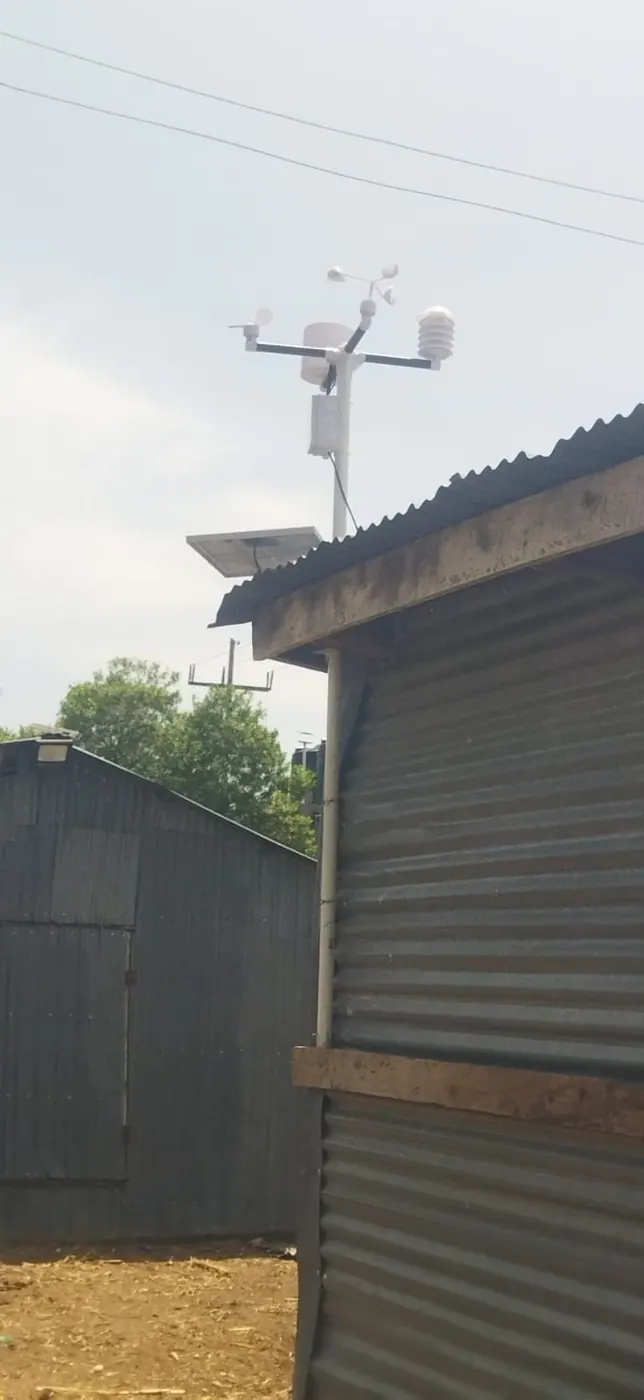
That last question is the one buyers least expect. It matters because FAO found that sponsors cut packages back to seed and essential agrochemicals after abuse. A scheme that has already narrowed its package has already had side-selling, and its grading will reflect that. On your side, a rain gauge and a notebook build the record a dispute needs. A NuaSense station does it without the morning walk, logging rainfall in millimetres and air temperature every ten minutes, a record of a stated past period and nothing more. Buy it for the irrigation and spray decisions, the kind the fertiliser timing post argues should follow soil conditions rather than the calendar. If not, do not buy it at all. A contract is read, not measured.